Navigating your path into grad school can be tough, especially when options might feel infinite. Being able to make an informed decision at this stage is crucial as it can have a profound impact on the rest of your life. In this post today, we’ll talk about seven factors that make our Master of Public Health a great choice for anyone considering a career in public health.
- CEPH accreditation
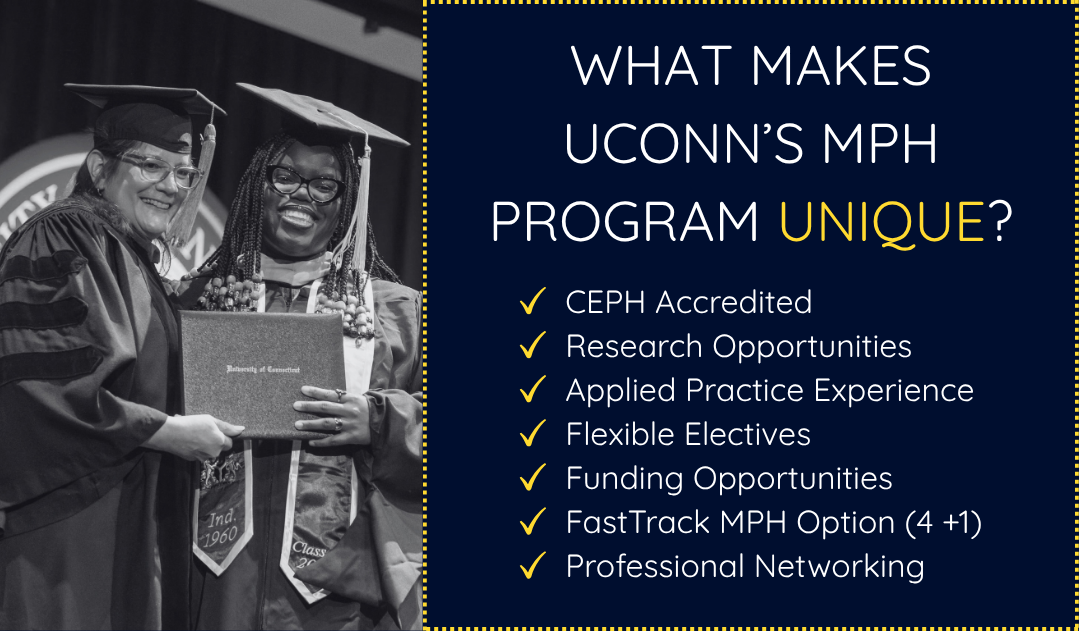
The MPH program at UConn Health is CEPH accredited. CEPH stands for the Council on Education for Public Health, which ensures that curricula, faculty, and resources offered in the program are rigorous enough to guarantee competent professionals for the workplace. What this means for you is that the program’s curriculum is held to a nationally recognized standard, ensuring a high-quality education that equips you for success in the real world.
- Interdisciplinary Research Opportunities
Collaborating on research projects with professors is one of the most rewarding experiences of grad school. This experience not only helps you build your research skills but also paves the way for additional opportunities in academia and research. The practical experiences you can gain through these experiences pay off immensely in the long run.
At UConn Health, our program has faculty from a plethora of fields who are engaged in cutting-edge research. If you enjoy research and want to hone your research skills further, you’ll have plenty of opportunities to do so. To learn more about our faculty research interests, please visit here.
- Applied practice
For many of us, grad school is the final stage of formal education before entering into the professional world. Therefore, it is important to choose a program that makes practical learning a part of its curriculum so that we can be better prepared for the professional world.
The MPH at UConn Health goes beyond classroom experience. It allows you to apply your learned knowledge into real-world settings through practicum, capstone, or a thesis project. From practicum, a supervised hands-on field experience with a local health organization, to capstone, you’ll have plenty of scope to gain real-life experience. The program also offers many volunteering opportunities that offer you the chance to become involved with the community and put your learned knowledge into practice in a meaningful way. Each of these experiences will bring you one step closer to becoming an efficient and resourceful public health professional.
If you’re interested in learning about practicum or our grad students’ experiences, please visit here.
- Customize your degree
The MPH program offers a variety of electives to choose from. In addition to the core courses, these electives give students the opportunity to tailor their degree to their own interests. Whether you are interested in statistics, occupational and environmental epidemiology, or law and ethics, there is something for everyone. This variety of electives helps students build a strong foundation in their chosen area of interest.
- Funding opportunities
The MPH program at UConn Health also offers many funding opportunities for students. These funding opportunities come in many forms, such as fellowship, teaching and/or research assistant, graduate assistant, and more. In addition to providing invaluable practical experiences, these opportunities often provide tuition remissions or a stipend for students. What’s more exciting than getting paid for studying?
- Accelerated program
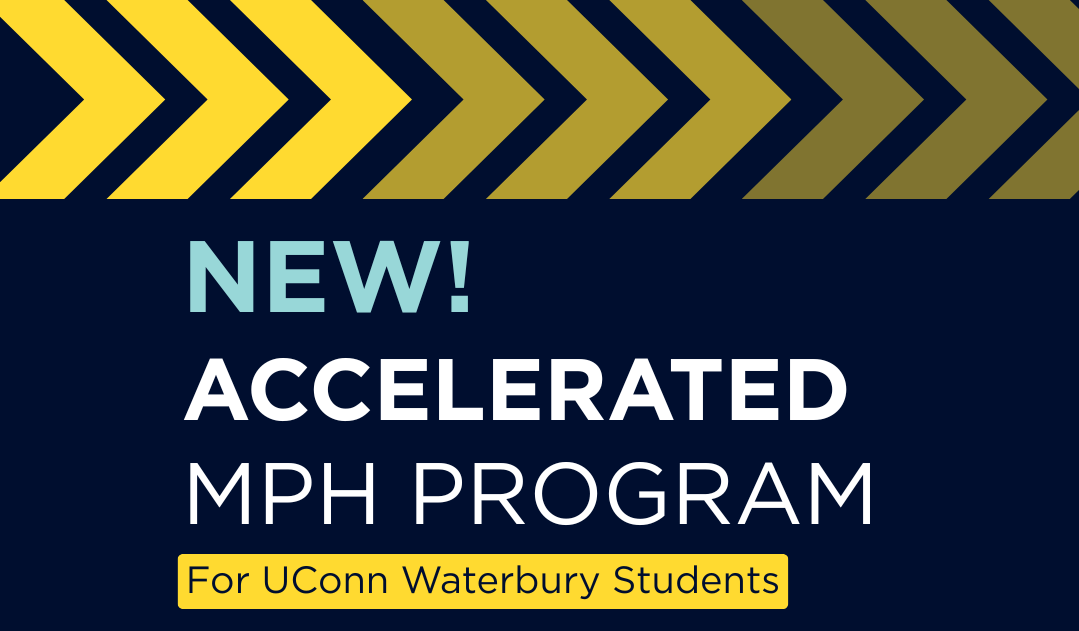
The MPH program at UConn Health also offers many dual degrees and an accelerated program. Our most common accelerated program is called the FastTrack MPH program, which enables UConn undergraduates to earn a Master of Public Health in one year. In this program, eligible students take 12 graduate credits during their time in undergrad that count toward both their bachelor’s and MPH degrees, saving both time and money. If you’re interested in learning more about our FastTrack program, please visit here.
- Expanded networking opportunities
Our MPH program attracts students from a variety of fields, including medicine, business, psychology, and data science. Each class is designed to encourage collaboration at every step, providing ample opportunities for students to connect and build professional relationships. The connections formed in the program often result in lifelong friendships.
As mentioned in the article, graduate school is often the final stage of formal learning for most of us. So, before you choose your grad school, ensure it is equipped with resources to help you reach your goals.
If you have any questions, please reach us out at publichealth@uchc.edu.